Prairie View A&M Police
Prairie View A&M University Police
Prairie View University Police Accountability
Prairie View University Police Accountability entails holding both individual officers and law enforcement agencies accountable for delivering effective crime control services and maintaining public order. Officers are expected to uphold laws regarding due process, search and seizure, arrests, discrimination, ect.
Prairie View A&M Police Transparency
Prairie View A&M Police accountability entails holding both individual police officers and law enforcement agencies accountable for delivering effective crime control services and maintaining public order. Police are expected to uphold laws, regarding due process, search and seizure, arrests, discrimination, ect.
The Brenham Police Department is being sued again
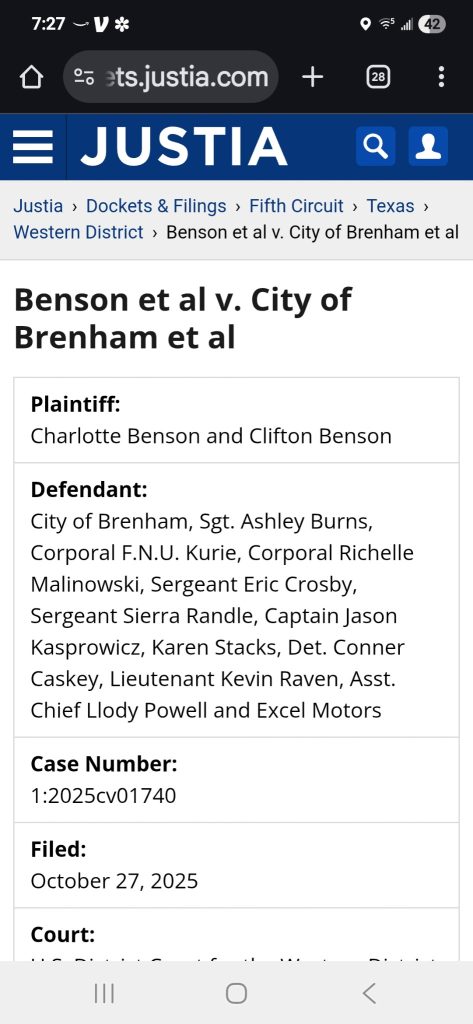
Brenham, Texas – This is the second lawsuit to be filed against the Brenham Police Department and the city of Brenham in the last year. This latest law suite regards discrimination.
Defendants in the lawsuit are: City of Brenham, Officers Ashley Burns, Thomas Kurie, Richelle Malinowski, Eric Crosby, Jason Kasprowwicz, Karen Stacks, Conner Caskey, Kevin Raven, Llody Powell, and Excel Motors.
Thomas Kurie was with the PD for 24 years and left in 2024 to work for the Waco ISD.
Conner Caskey was with the PD for 4 years and also left in 2024. Now works at the Fulshear Police Dept.
Llody Powell was with the Brenham PD for 27 years and retired in 2024. Powell is now an officer with the Prairie View A&M University.
Stand Up For Our Laws and Refuse Unlawful Orders
There Is No Left and Right – Only Tyranny and Freedom
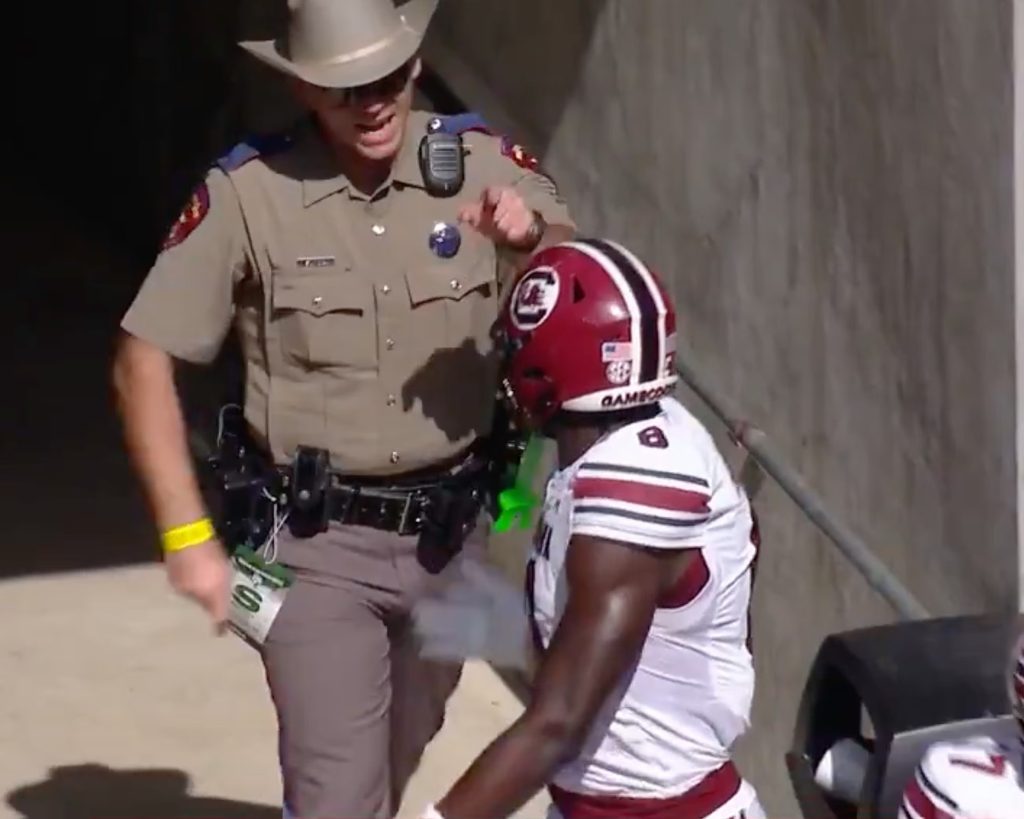
Texas DPS Trooper Is Sent Home For Internally Bumping Into South Carolina Players During The Game Against Texas A&M
Texas DPS.
A Texas Department of Public Safety trooper bumped South Carolina wide receiver Nyck Harbor and scolded him after Harbor scored a touchdown late in the first half of the Gamecocks’ game at Texas A&M.
Texas DPS – After Harbor pulled away from Aggies defenders on the way to an 80-yard touchdown, he slowly jogged up a tunnel while favoring his hamstring. As teammates and the South Carolina players followed Harbor walked out of the tunnel seconds after the touchdown, an officer bumped through the players before turning around to say something to them angrily.
If police treat blacks this way on national television, think how they’re treated on the streets
More Information and records about the cowardly Texas DPS Troopers
POLICE CORRUPTION
Police corruption is the abuse of police authority for personal or financial gain, ranging from minor favors to systemic criminal behavior. It erodes public trust, undermines the rule of law, and can have devastating effects on individuals and communities.
Corruption can be categorized by the scale and nature of the misconduct:
Corruption of authority: The misuse of a position of authority for personal benefit. This can include taking small gratuities like free meals or discounts in exchange for favoritism.
Extortion and bribery: In extortion, an officer uses threats to demand money or favors. In bribery, a civilian offers an officer money or favors for preferential treatment, such as avoiding a ticket or an arrest.
Police misconduct
Police misconduct is inappropriate conduct and illegal actions taken by police officers in connection with their official duties. Types of misconduct include among others: sexual offences, coerced false confession, intimidation, false arrest, false imprisonment, falsification of evidence, spoliation of evidence, police perjury, witness tampering, police brutality, police corruption, racial profiling, unwarranted surveillance, unwarranted searches, and unwarranted seizure of property.
Types of police misconduct include:
Bribing or lobbying legislators to pass or maintain laws that give police excessive power or status
Similarly, bribing or lobbying city council members to pass or maintain municipal laws that make victimless acts ticket-able (e.g. bicycling on the sidewalk), to get more money
Selective enforcement (“throwing the book at” people who one dislikes; this is often related to racial discrimination)
Sexual misconduct[1]
Off-duty misconduct[2]
Killing of dogs unjustly[3]
Noble cause corruption, where the officer believes the good outcomes justify bad behavior[4]
Using a badge or other ID to gain entry into concerts, to get discounts, etc.[how?]
Influence of drugs or alcohol while on duty
Violations by officers of police procedural policies
Abusive police procedures
Police Officers
Police officers often share what is known in the United States as a “blue code of silence,” which means that they do not turn each other in for misconduct. While some officers have called this code a myth,[5] a 2005 survey found evidence that it exists.[6] A 2019 study in the journal Nature found that misconduct by one police officer substantially increased the likelihood that peer officers would also engage in misconduct.[7][8] In addition to the blue code of silence, police misconduct can also lead to a miscarriage of justice and sometimes the obstruction of justice. At least 85,000 officers in the US have been investigated for misconduct, and some are constantly under investigation; nearly 2,500 have been investigated on 10 or more charges.